
Stewart Grahame's "Where Socialism Failed"
An Actual Experiment
Posts on this site may contain copyrighted material, including but not limited to music clips, song lyrics, and images, the use of which has not always been specifically authorized by the copyright owner. Such material is made available for purposes such as criticism, commentary, news reporting, teaching, scholarship, education, or research, in accordance with the principles of fair use under Section 107 of the U.S. Copyright Act.
Recent pieces involved in my research into socialism led me to a fascinating book out of Australia in the late 1800s.
This work is a fictional letter from author Stewart Grahame to his friends and associates after the publication of his book, "The Failure of Socialism - An Actual Experiment".
It is based upon the findings in his book. My intent is to summarize his observations and conclusions for a generation with a much sorter attention span than those of the late 1890s. <grin>
What I found fascinating is the obvious parallels to the lessons learned in the Jamestown Colony during the early settling of America. I wrote about that in a previous post: "Today's Democratic Socialists Could Learn A Great Deal from the Jamestown Colony" and the accompanying song, "The Common Store."
The lessons learned in New Australia are virtually identical to those learned in Jamestown, Cuba, Venezuela, Czechoslovakia, The Soviet Union, China ... and more.
Enjoy ... and be sure to listen to the new song, "Shoot Your Way Out."
Rather listen than read? Click play here ...
Dear Friends,
I trust this letter finds you in good health and spirits amidst the turbulent times we face. It is with a heavy heart, yet a resolute conviction, that I pen these lines to you, drawing upon the lessons enshrined in my recent work, "Where Socialism Failed". As you know, I dedicated that volume to my son Douglas, in the hope that future generations might learn from the follies of the past. Today, I wish to elaborate upon its core arguments, framing them as a cautionary missive against the seductive allure of socialism—a system I have witnessed crumble under the weight of its own contradictions and the unyielding truths of human nature.
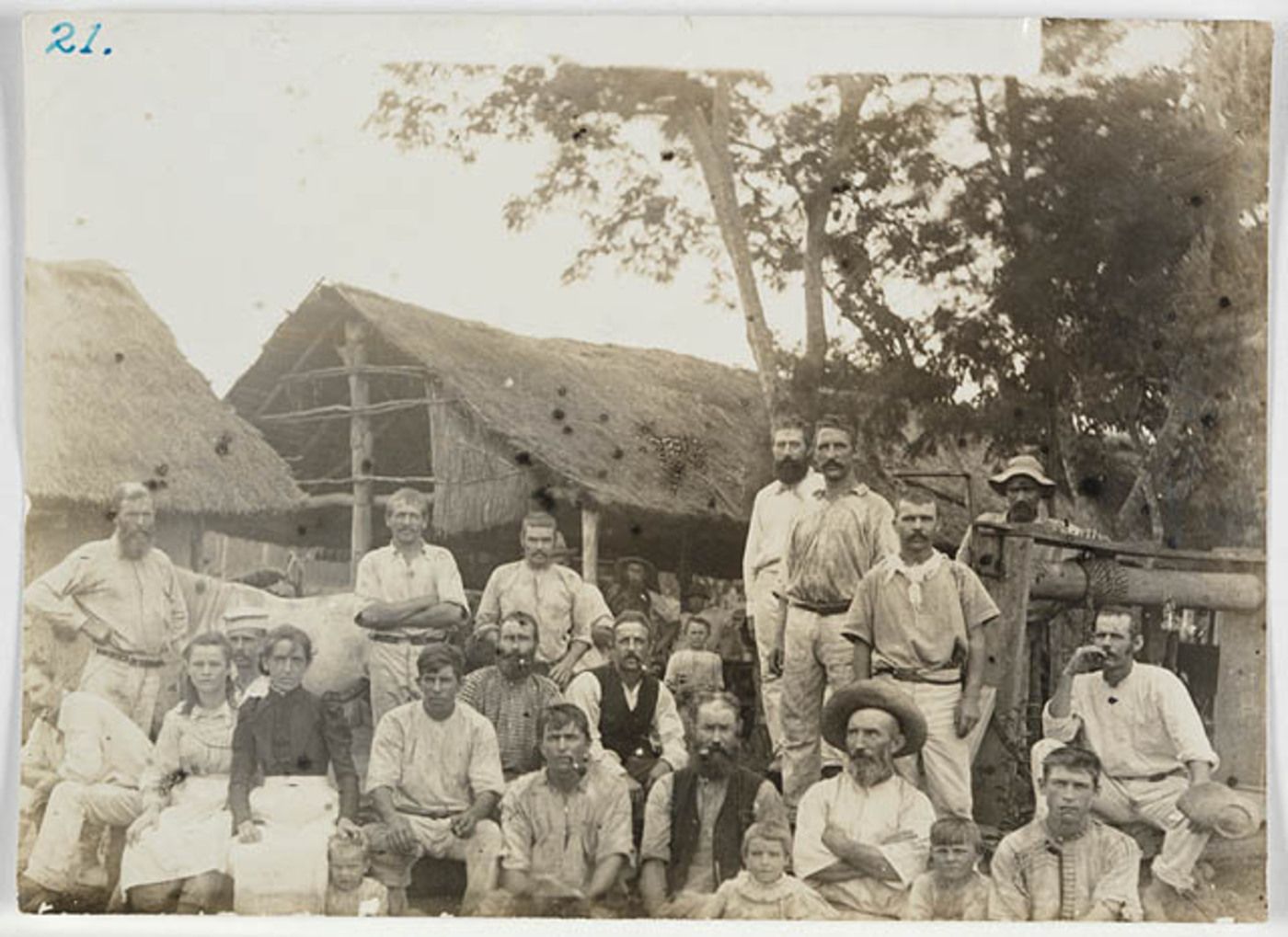
Allow me to begin by recalling the genesis of this ill-fated experiment. In the wake of Australia's great strikes, a band of earnest socialists, led by the visionary yet misguided William Lane—whom I once likened to a "better Napoleon"—set sail for Paraguay in 1893 aboard the "Royal Tar". They sought to forge a "Promised Land" of communal equality, free from the capitalist evils they decried. New Australia, and later its splinter, Cosme, were to be beacons of collective ownership, where all labor was shared and rewards distributed equally. Yet, as I chronicled in painstaking detail, this noble dream devolved into a nightmare of discord, inefficiency, and despair.
The first and most profound lesson is that ideological purity inevitably clashes with humanity's innate need for incentives. In New Australia, settlers soon lost their zeal under communal ownership; why toil diligently when one's efforts yielded the same meager share as the idler beside him? As I observed, "human nature is human nature," and the absence of personal reward bred shirking and stagnation. The fields lay fallow, tools rusted unused, and basic sustenance became a daily struggle. This mirrors a timeless conflict: socialism presumes a transformation of the soul, purging self-interest as if by decree. But, as the colonies proved, no edict can erase the drive for personal gain that propels progress.
Leadership, too, bends toward authoritarianism in such collectivist realms. Lane, with his iron will, imposed draconian rules—expulsions for dissent, prohibitions on alcohol and even private conversation—turning utopia into tyranny. The first expulsions rent the community asunder, for who can endure equality enforced at the point of exile? Human nature abhors such concentration of power; it fosters resentment and rebellion, as envious eyes watch the leader's privileges grow. In my chapters on these secessions, I detailed how Lane's own departure to found Cosme stemmed from these fractures, underscoring that no man, however idealistic, escapes the corrupting lure of control.
Moral decay follows swiftly when personal accountability dissolves. In the settlements, communal living blurred boundaries, leading to infidelity, theft, and a "hell upon earth" of vice. Without private property, envy flourished—accusations of favoritism poisoned the air, and pilfering became commonplace. I posed the question: "Who will do the scavenging?" Unpleasant tasks went undone, for none volunteered in a world of enforced equality. This erosion of ethics stems from socialism's materialist core, which neglects the spiritual anchors that temper our baser instincts. As I noted in reflecting on the suicides that plagued the colonies, a vacuum of religion and morality invites despair, proving that man cannot thrive on bread alone, nor on shared loaves devoid of individual dignity.
Internal conflicts, inevitable in any human endeavor, magnified into fatal fractures under socialism's yoke. Ideological splits—over rules, labor, even interracial relations with the native Guaranis—led to secessions and anarchy. Lane's recruits, drawn by fervent propaganda, proved ill-suited to hardship; dreamers faltered where pragmatists might have endured. Economic isolation compounded the woes: self-reliance in Paraguay's wilds yielded famine, forcing hypocritical forays into business that contradicted their creed. All for one became none for all, as trust evaporated amid envy and theft.
These failings, my dear friends, are not mere accidents of circumstance but inherent to socialism's design. As I concluded in my book, "the progress which the New Australians commenced under the handicap of Socialism has been continued by other Englishmen who have prospered exceedingly in Paraguay." Had the venture embraced ordinary commercial principles—private enterprise, incentives, and accountability—it might have flourished. Instead, it dissolved into individualism, with survivors reverting to capitalist ways. Socialism demands a revolution in human nature, yet as the colonies attest, "human nature doesn't change with new conditions." It remains a tapestry of ambition, frailty, and aspiration, ill-suited to the rigid mold of collectivism.
In these modern times, as whispers of socialist reforms echo across our lands—be it in labor agitations or calls for state control—I urge you to heed this warning. The experiment in Paraguay was no aberration; it reveals the unsustainable folly of any system that wars against our fundamental drives. Let us cherish the freedoms that allow human nature to thrive, not stifle it in pursuit of unattainable equality.
With warm regards and hopes for your continued prosperity,
Stewart Grahame
Share: